Pages

Sunday, February 14, 2016

Caught

Dag Terje Filip Endresen, "Entrance
to the Svalbard Global Seed Vault, seen
the day after its opening," 2008

Between waking and sleeping, I float in some
indeterminate place, catch glimpses of myself
through dream-crusted eyes; find myself there
in the Bardo of Napping as the ghosts of cold
milk, warm cookies whisper, “Lie down, hush,
go to sleep now.” It seems I’ve caught a cold.
I sneeze in triplicate until I’m elsewhere, visit
unfinished landscapes where scrubby low trees
smell like sarsaparilla and the flowers bleed red.
There, I’m riding a seed that’s hoisted by ants
who pass me from one to another, myrmechorial
dancers sending me and theirs on towards the
cache: a new Bardo, the Bardo of Seed-Banks.
Sleeping again, waking again, unsure if I’m in
loamy tunnels or in my own bed until tossed
out; falling out of that dream, I place one bare
foot, then the other, on the floor. Loose seeds
roll beneath my feet, all just aching to sprout.

Gardening

USDA NRCS South Dakota, "Final Carrot
Harvest in South Dakota High Tunnel
," 2013

I’ve heard what’s pulled from a winter garden is
sweeter after the frost. Not always true for what
grows above ground—tender things get nipped,
may die. But for those that root underground—
parsnips, celeriac, carrots all come to mind—the
chill hand reaching beneath their compost blanket
brings a gift of transmutation: starches to sugars,
from what’s been stored to what’s been set free.

Saturday, February 13, 2016

Forgery

John Fowler, "In Little Death Hollow Canyon," 2015

It’s just that this poem, these words, my
alphabets, are forgeries. The provenance
smells right—redolent of crushed gravel,
resin and eye-sting of cedar pollen, dried
mud—but they’re intended to fool us into
feeling what’s not there, lead us to believe
(myself most of all) in this edited world.
Any real thing is unfixable, evanescent, if
it’s real at all; what I share’s a simulacrum.

And yet, and yet, there’s something else
here: an indelible ink, passed from mouth
to mouth, hand to hand, flashflood washing
down through this dry slot canyon, up then
splashing over my poor thin fakery, making
it as real as any world that holds us both.

Witnesses

It was clear and shining, even at half a football field away.
The radiance surrounded those two young women, one
dark, one pale—Rose Red and Snow White with cropped
hair—and it drew my heart to theirs. My friend nudged
me, so we slowed as we approached them, seeing and
understanding without being told what had happened—
we’d witnessed a betrothal. “She said YES!” beamed the
blonde, while her darker lover, with the blank shy smile
of someone dazed by their own life, showed us the ring.
My friend offered to take their photo; fumbling for the
phone, the fair-haired one handed it to us, stepped back,
and, snug alongside her fiancée, she faced her witnesses,
faced the morning, faced their unwritten story to come.

Friday, February 12, 2016

Plea

Dan Slee, "Child walking alone on a beach," 2010

I remember walking along Virginia Beach
under a low gray sky, feeling loneliness as
vividly as only a child can feel it—piercing,
long as the shore, empty as the wet sand
where I walked. I’m sure my family must
have been close by, somewhere. I’m sure
it was only a passing moment. Still, here I
am, brave woman stronger than the child
I was could have imagined, and loneliness
still circles me, makes me call my invisible
friends by name: “Oh come visit, and stay.”

Tumbler

Salsola tragus, Forest & Kim Starr
via Wikimedia Commons

Just the one: not a saltimbanque family
like Picasso portrayed; neither an animal
nor mineral, but isolated, vegetable. You
go rounding off down the road, diaspore
with a thousand fingers all splayed open,
then spring back from asphalt over and
over, spilling propagule after each roll.
Gymnast weed, o brittle wanderer from
the steppes, you snuck in cross-border,
pile up along fence-lines; every cowboy
from Tin Pan Alley sings your name, but
none know your empty heart like I do.

Wednesday, February 10, 2016

Confession

Penzai on a mural in the Tang Dynasty
tomb of Prince Li Xian, 706 CE

“The first highly prized trees are believed to have been collected in
the wild and were full of twists, knots, and deformities. These were
seen as sacred, of no practical profane value for timber or other
ordinary purpose.” - From the Wikipedia entry on penzai

At first, what was sought looked like what we are: bent concisions
formed naturally, a graceful response to unnatural stresses. Later,
artifice and craft took matters in hand and applied their snip-shears
to the very root of things. That’s why, wearing night to hide myself,
I broke into the nursery where all penzai are formed, stole one or a
hundred, climbed up past clouds to the ash-laden soil on the side of
a mountain. That’s where, wearing a waterfall disguise, I wheedled
the crescent moon down to help me dig holes in the dirt, replanting
each damaged tree in its own cast shadow, to grow as it would. For
a day or an age we’ll hide in that new-old forest, spinning my thefts
into raveling yarns of the sacred, the impractical, the heroic; collect
and recollect one another, confessing to no crime at all.

Tuesday, February 09, 2016

Amnesia

Brocken Inaglory, "Fossils in a beach wall," 2007

Like a beach wall that’s sun-struck, then chilled, then
baked by the sun again, I’m spalling. All my memories –
(sedimentary, additive, a soft entombment of all those
drifting everythings that slowly settled to the bottom
of my evaporating seas) – are flaking off, and I split as
if struck by a hammer, crack along fissures too fine to
be seen by any eye. I forget my name (it’s on the tip
of my tongue), forget how to listen to the collective
that makes a self, the commensality that binds itself
together by chemical whisperings and handfastings.
And yet, even without listeners or listenings left, at
the long blank broken facings of amnesia, something
new pushes up in the interstices: something like love.

Saturday, February 06, 2016

Spoons

David Clarke, "Blow," 2014, pewter and spoons

1.
As if it were an outstretched arm & cupped
hand, made fine as any by Hilliard: carved
rock crystal, gold shaped to bear an unborn
sea to pale lips. That faint sound, the rustle
and shush of watered silk; and fainter, still,
under Argentan lace, a whispering pulse at
the wrist of the hand that holds the spoon.

2.
So delicate, this coral tree grafted on a stalk
of shell-pearl white as shaved ice! Beading
sweat jewels the skin while women “naked
in different postures, some in conversation
others drinking Coffee or sherbet” wait for
the same slaves who brought them Ĺźerbet
spoons to weave ribbons through their hair.

3.
Twelve apostles plus Christ, hammered out
of silver not nail-iron, forged as a set for the
child-to-be-immersed. These are now hidden
in a drawer, set in rows on rag paper, loosely
covered with a white cloth: a winding shroud
to preserve them from the rot of time, from
the degradation of touch on saint or spoon.

4.
We two, who feed ourselves with art, lick it
in all its forms from a single source of joy like
sticky children sucking the sweetness from a
snow cone, staining fingers, lips, tongues—
we, too, carve ourselves into the necessary
shapes to dig a little deeper into that dish;
are cast, molten, into the forms of spoons.

Tuesday, February 02, 2016

Coscinomancy

"Heart and its blood vessels," by Leonardo da Vinci

“…when the young woman, the sorceress, took in hand
some of the tarn water and spake over it words not to be
understood, the fishes lifted their heads and stood up
on the instant like men…”

From “The Book of the Thousand and One Nights,”
Richard F. Burton

Yes, cupped hands can make a sort of sieve, but
it’s my heart that’s a perfect fit for this oracle: it
takes both the sieve and the shears to spell out
hidden things in this way. I run on through early
dim light, feeling not seeing, atria emptying and
valves snipping shut—cut the stream, reopen for
the fill, syncopation pushing blood through the
mesh of my lungs. There are words I speak over
my jackhammering heart, this sieve and shears,
words not to be understood, not even by myself;
and when I speak them, the oracle tells me all the
names of what had been hidden inside my pulse.

Saturday, January 30, 2016

Erosion

Photo by Blackland, 2014

The land-shaper here is always water, whether we’re
in drought or not. Paths are scoured, or washed away
when it steps down from the sky. We’re too far from
an ocean for any maritime god to lay a claim—when
land’s reshaped around us, it’s the sky god flinging his
shovels of rain who does it. Even a seep can become a
crow-bar in winter, jimmying ice-blades between layers
of lime and chert, cleaving them into sharp brittle flakes,
some with the bones of past seas showing, some mute,
too shy to speak, but dense and siliceous, a knapper’s
delight. Further along: flint nodules washed out from an
undercut ledge, steel-gray, fine-grained. They’ve been
tumbled one against the other at each flood until their
conchoidal fractures lost every serrated edge; now they
drift to sleep, dream of rain falling on their gravel bed.

Wednesday, January 27, 2016

Three-in-One

"The Line Cook," photo (manipulated) by staxnet, 2009

For flavor, not heat—the line cook calls on
his holy trinity: hands dance their two-step
with knives, kitchen mumblety-peg that’s
left fine scars next to the burn marks and
tattoos. This one’s God the Father, cher,
he says as he winks at me, dicing the onion
until we both cry; this, the Son (bell pepper
almost comically green), that’s Eternal Life.
And the celery, pale and thin, disappearing
into the gumbo like the very Ghost? Spirit
moves us, moves us all in mysterious ways,
he says, belly and hips swaying as he stirs.

Tuesday, January 26, 2016

Listening

Aphrodite Anadyomene, Fresco from Pompeii, Casa
di Venus, 1st century AD, photo by Stephen Haynes

An ancient seabed made these hills, where
the only things rich and strange are the whistle
and percolation of bats bubbling up at dusk,
pouring out from a cavern beneath my feet. No
pearls, no coral; just karst, limestone, chalks,
and a seep hidden by maidenhair fern. I know
this place by touch more than sight now—loose
scree rolling underfoot, bare-root handholds,
slickrock, and tannic stains on all my fingers. So
when I tell you I held a fossil oyster shell to my
ear, held it there until I heard primordial oceans
lapping a warm shore, you should believe me.

Saturday, January 23, 2016

Restorations

Edgar Degas, "Dancers Practicing at the Barre"

Elsewhere, there’s a painting set on a conservator’s stand. It
waits for the touch of a blue nitrile glove, for her gaze under
the light. In another place, two dancers at the barre embody
and contradict that object on the conservator’s stand. Always
like this, it seems—the hand, the object, the body, the work
of love and attention, the brief time we have to practice such
skills as are needed to restore what’s been damaged, to make
things (and ourselves) whole. Sweat and rhythm and grace, the
solvent for our dancers; ethanol and patience, the solvent for
copal and age; our restorations revealing beauty, unvarnished.

Friday, January 22, 2016

Speaking in tongues

Mt. Hood Wilderness Near Ramona Falls

I went downhill then up the cinder cone past
quiescent Doug-fir, out of breath now, heart
beating loud enough to drown out the flame-
lit prayers of some Mexican men possessed by
the spirit on so early a Sunday in these woods.

A loose gathering under a canopy of painted
sawn wood and tarpaper; each man a picket-
post, planted in their God. Is it an immigrant’s
splintered glossolalia or a Pentecostal fire that
shakes them, loosening tongues of flame above
each head? I can’t quite hear. Like the Doug-fir
at the top I’m deaf and cold, my lungs burning,
mist pearling rain on my face. Yet despite the
chill, sap still rises, filling our limbs—the men,
trees, me—with the washed gold of the day.

Tuesday, January 12, 2016

Affici amoris ergo

Nicholas Hilliard, "Man Clasping a Hand from a Cloud,"
1588, © Victoria and Albert Museum, London

Some scholars think the golden letters call forth the Attic,
a reading that brings a mythic past to the bauble’s present,
but this viewer prefers to misread the “t” as “f” and make
Affici not Attici the first word at hand. After all, why would
Hilliard (or his sitter) break the miniature’s lovers’ Latin with
a Greek conceit? A jewel, this limning, a puzzle-poem that
hints at a celestial love secreted by clouds and cropping—
pledged hands not hidden, but clasped within the frame.

Wednesday, January 06, 2016

Sewing

Gabriela Camerotti, Cinderella, 2007

Such a simple repair, but it sends a chill shiver
down my spine: tightening loose buttons on a
gold & black lace tunic. Fairytale maids whisper
in my ear as I thread the needle, pricking me,
singing, “What’s buttoned tight can be undone,
sew it right or away it’ll run.” Is that spark and
crackle at my fingertips just static electricity, or
something deeper, something that’ll pierce us
and stitch us to time, to all the oldest stories?

Tuesday, December 29, 2015

Asymptosy

New fruiting bodies pop up from my compost
heap of language, like this one—asymptote
and I’m torn between putting it in my basket,
or leaving it to shake its fungal head and toss
spores windward. Oh, okay then, I’ll reach for
the word. But slow. Slower. Hand ever closer
but not. Quite. Grasping it, at all—a geometer
I’m not. Yet there are other paths. Desire, like
an asymptote, is “always approaching, never
arriving;” but even a spore will find its way to
germinate, once it’s blown clear of the graph.

Sunday, December 27, 2015

Tagetes lucida

It’s a Western plant, all right. The only thing Old World
about this little scruffy shrub has been grafted onto its
name: Tages, the prophet who appeared at plow-time
and taught the Etruscans divination, who’d brought light
alongside him within the anise-scented leaves. But his
influence in the New World is limited. The Guatemalan
and Mexican grandmothers have ideas of their own as
to what to do with this gift, and there’s not much use
for an old prophet from another place and time when
their santos live now, know them each by name. Folks
to heal, children to nurse, meat roasting: old Tages must
sit outside the jacal until the grannies call him to help.

Saturday, December 26, 2015

Play

Horia Varlan, "Crude chalk drawing of a boat," 2008.

All children draw, if they have a way to do so.
Chalk on a sidewalk; a rock small enough to fit
a little hand, hard enough to scratch away the
desert varnish from a cliff; a stick in wet sand.
Now we are older, you and I, and carry caveats
in our pockets instead of the treasures we’d
find in the woods. But still, still, I sometimes
palm a piece of flint and leave a mark for you
on the soft limestone: a little sun or a heart,
ready to fill with a trickle from the seep that
softens the caliche; play, to guide you home.

Monday, December 21, 2015

Construction

The tensioned rebar remembers the furnace, and the
furnace remembers its refractory bricks. This garage,
its nested voids skinned in cast concrete, remembers
the weeds that once patched the alkaline soil: a caliche
blanket snatched away before the garage could dream.

The interlocked slabs that make the garage an empty
vessel are kin to those cast alongside the highway. At
dusk, those flat planes lay open like palms to a fortune-
teller, the seams like lifelines waiting to be traced by a
patterned, rusted finger. This evening, a visitor: a lone
woman dancing slow, measured flamenco arabesques;
her boot-heels stamp out a rock-dust duende, consoling
the weeping concrete for what it can no longer dream.

Saturday, December 19, 2015

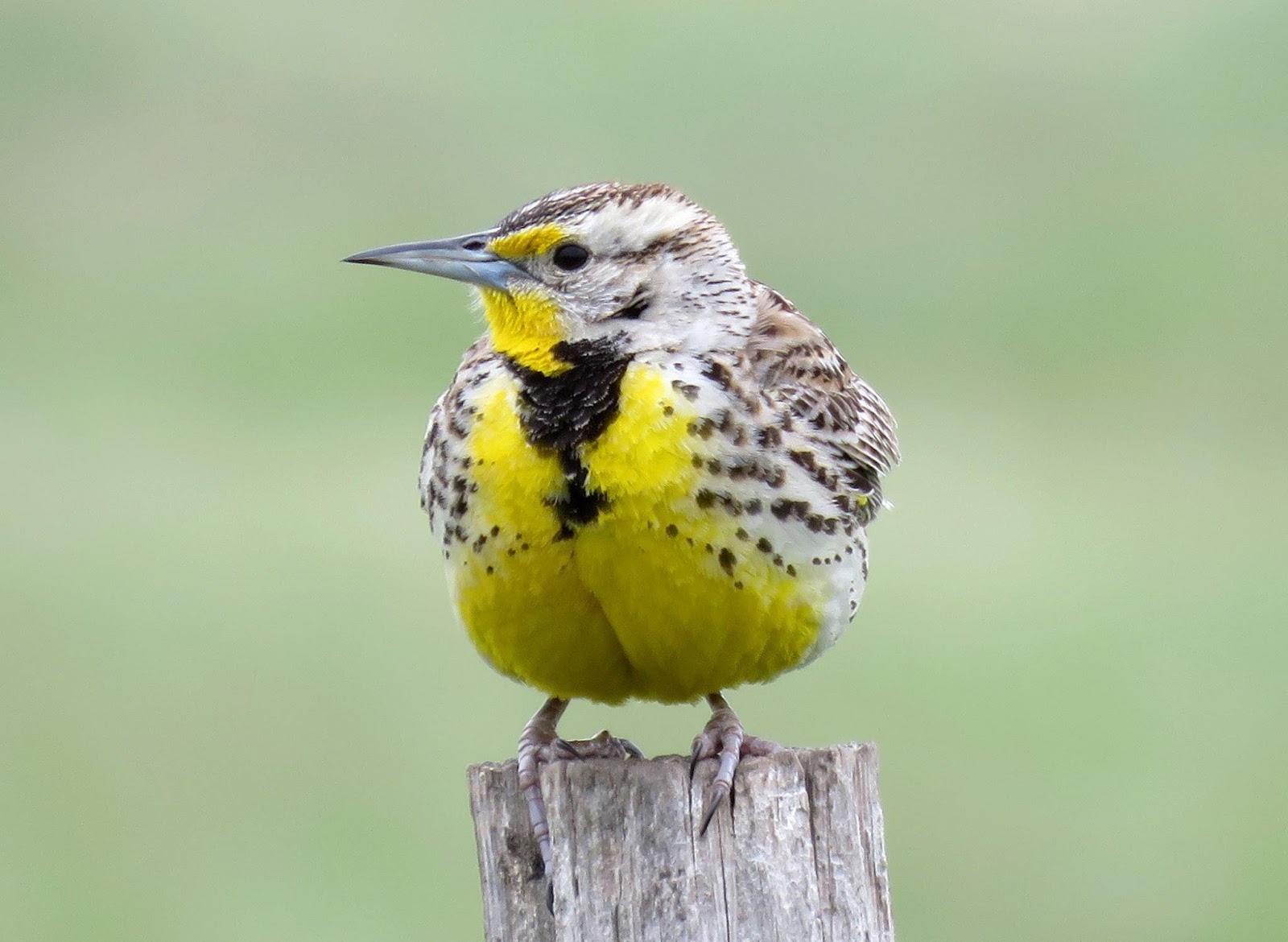
Meadowlark

Photo by Alex Galt/USFWS, 2015.

A slow walk along piled riprap that’s holding back
the waters. Is it an embankment for an earthen dam,
or the lip of an ancient monster’s water-jug, half-
buried in an avalanche of oyster shells cast off after
feasting, still sharp underfoot? Both could be true.
I listen as the wind stuffs my ears with a dizzy racket:
rattle of blown cattail spikes, gimlet-eyed grackles’
whistlings. Then a gift at my feet, perfect, unmoving—
a sulphur butterfly, legs folded, not long dead. I’m
its only mourner, in the absence of a meadowlark.

Friday, December 11, 2015

V. Meurent

Source image: "Ferns at the Royal Melbourne
Botanical Gardens" by Fir0002/Flagstaffotos

Unwinding myself. Much like the string that
makes nautiloid arcs in the geometers’s texts,
I’m pulled just tight enough to sing if stroked.
“Let’s practice drawing involutes freehand!”
I’d say, and you’d reply with a smile, pointing
towards a fern uncurling at our bare feet. It’s
not an involute curve, true, but this soft green
volute unwinds us out; its center so far from
the geometer, so very close to where we lay.

Wednesday, December 02, 2015

Model

Édouard Manet, "Le Déjeuner sur l'herbe," 1862-63.

Not a simulacrum, sitting here wearing
nothing except your gaze on my skin,
but the X-factor in the work: it can’t be
done without me. The room smells like
turps, linseed oil, wooden stretcher bars,
and sweat. Those single-pane windows
sieve the light, let in the cold, but I don’t
feel the chill. A galaxy of hot lamps circle
me like little suns, put me at the center
of this universe where I’m neither subject
nor object, but co-author: the one not
holding the brush, the one who embodies
the question of what’s being, and what’s
represented, in that fresh, gliding stroke.

Sunday, November 29, 2015

Trivia

Liz West, "Junk Drawer," 2013.

It’s like a junk drawer in here, full of
obscure treasures, broken toys, books
I’d forgotten (whether to read them or
what I’d read, well, I forget that too.)
I reach in, back to the back, and find
there is no end to it. The drawer goes
on, the cabinet deepens, and I grow
smaller, lever myself up by brass pulls
and fall in. Socks make a soft landing.

Forty questions later, the jinn pause,
wait to hear what I’ll say in response
to the next question. That question is
the one unasked: the one to which the
only answer is laughter and joy, here
in the endless junk drawer of memory
where the jinn circle our stories, glow,
burn without charring bits of our lost
childhood, the forts in the forest, all
the fine trivia and pocket-lint of love.

Thursday, November 26, 2015

Awl

Peacock feather on the ground

You can’t stitch together what’s not been pierced,
and these memories do pierce me. I bind them up,
chain-sewn through the piercings, and think about
those scraps of Moroccan leather you had tooled
with an awl—what a beautiful, wine-dark cover
they’d have made for this retelling of our stories.

Except we didn’t really tell stories, did we? No, we
sat together, dug Johnson grass out of your garden
together, watched the late afternoon light as it left
gold coins strewn on your living room rug, together.

My friend, my friend, it always seems that if I had
the right set of tools, I could take that lock, finesse
it open, that lock that keeps thee from me. But I
don’t, I can’t. And anyway, you’d laugh and tell me
to get outside where the rain lilies are blooming,
use that dull awl to punch holes in the caliche, plant
some lily seeds and some fresh, feathered dreams.

Sunday, November 22, 2015

Cascarones

"Easter Morning: Battle of the Cascarones," Arianne, 2011.

They say that Marco Polo brought the idea
of cascarones from China back to Venice, but
if he did, what might have been the reason?
Surely the Venetians knew how to pitch woo
without needing to toss perfume-filled eggs
at their lovers. Regardless, cascarones are here
now, having travelled from Italy to Spain to
Mexico to San Antonio to my neighbors’ homes,
these tissue-papered eggs of love & luck filled
with confetti that teases and marks the beloved
at every breakage. So if cascarones were a poem,
what would they mean? “It’s good luck to break
a fragile thing”? No, I doubt that. I’ll go with this:
“Love plays with you, marks you, gets in your hair.”

Monday, November 16, 2015

Patrimony

Tilda Dalunde, "Collecting toes
(In case of emergency)"

This is where we place the fingertips
of the children we lost to sharp knives,
to guns, to bombs. See, they fit so neatly
in rows in this vestibule, these dusky blue
reminders of what’s become so broken.
Such tiny fingernails. The crescent moon
in each is receding, as if it’s drifting far,
far away, taking a child with it, over the
fence that surrounds the pocked yard,
up past the clouds. The light’s gone out,
it’s been shot out, the shrinking moon
hiding its face behind those fingertips.

Saturday, November 14, 2015

Improvisation

From Otto Wilhelm Thomé,
"Flora von Deutschland, Ă–sterreich
und der Schweiz.
" 1885, Gera,
Germany, via Biblio.

The log in the middle of the creek
doesn’t seem firmly seated; neither
am I, leaning out over loose rolling
gravel for a better idea of how to
cross. There’s the balance point: a
place where the shadow beneath
the broken trunk underlines the
soggy bark, scribes the creek-bed.
No gap, but it’s off-center enough
to need me to be light-footed, a
barefoot dancer on what’d pivot
and throw me. I don’t trust my
body, don’t trust that I can be
single-minded enough to commit
with sufficient speed and grace.
I waver then wind moves the cane
nearby, telling me how it could
be done: first, cut a stalk almost
twice my height, tie my shoes to it.
Then take off my socks, put them
in my shoes, step up and, balance
pole low and in hand, let bare feet
read the bark while I keep my gaze
moving from horizon to log and
back. My shadow is an elongated
asterisk on the water below as I
find my footing, one step after an
unsteady other, until I look down
and see I’ve finally crossed.

Wednesday, November 11, 2015

Semiplume

We saw the hunter before we saw
the pheasant—a man far off down
the trail, bright orange hat, rifle in
hand, walking towards us. Then we
saw the bird. It stepped deliberately
near and ahead of us, towards the
hunter and directly along an invisible
line between where we came from
and where the hunter was heading,
as if we three, my brother and I and
the pheasant, had gone for a stroll
together, the pheasant a friend of the
family taking a slow constitutional with
us after dinner. My brother waved at
the hunter, to be sure we—not just
the bird—had been seen. We had.
We got a measured nod, as if to both
acknowledge us and to compliment
the pheasant on its skill, and then the
hunter abruptly veered off the trail;
a dog, his dog, had found something
to flag in the brush. A sharp exhale (I’d
been holding my breath), and then a
look down at a tangle of soft color.
I'd found a scattered handful of torn
feathers—stiff contour feathers and
downy semiplumes—from another
pheasant. There was a small smear
of blood at the base of one shaft. I
looked up at my brother just in time
to see our friend startle, dart away.

Sunday, November 08, 2015

Afterimage

A reconstruction of the Palaikastro Kouros, from
"Resurrecting a Lost Minoan God," Billings Gazette,
October 2008.

If you sit and fix your attention on him, this
youthful god shaped from ivory and beaten
gold, you might forget he’d been shattered,
burnt, buried in a midden, forgotten. Keep
looking: keep your eyes open long enough,
for hours or days, and when you look away,
the god will still be with you—no longer a
dead god in chryselephantine, but alive in
dark midnight blue, a vision of the dancing
Krishna floating in the Minoan afterimage.

Sunday, November 01, 2015

Silhouette

Brocken Inaglory, "Fog Shadow on Golden Gate Bridge," 2006.

I’ve been chasing light for ages. That gold-edged
blue just before the sun shimmied up? It slipped
through my fingers like a hatchling minnow. I’ve
waited in the shadows of a thunderhead to ravel
out fat skeins of crepuscular rays, only to come
home empty-handed; the light’s just too fast for
me, for anyone, really. (Once, though, I found if I
walked slower than my shadow could move, light
might press up behind me, kiss and silhouette me.)

Friday, October 30, 2015

Hydromel

The Aberdeen Bestiary, Folio 63r,
"Bees make honey and skillful hives"

The bees have been busy, as, well, you know;
their fanny-packs full of gold pollen, bellies all
swollen and tight as bodhrán drumheads from
a surfeit of nectar. They’re fat; it’s time to bring
smoke to the hive, set them to drowsing, pry a
frame out and open their wax-sealed treasures
to pour into new vessels: 5-to-1 water to honey,
boil and skim, cool it down, yeast it, wait for it a
few weeks 'til it begins to dance and hum the way
bees do, the way fingers tapping the bodhrán do,
the way we will do once that hydromel's tapped.

Thursday, October 29, 2015

Instructions

"Flint Knapping" by Travis S. on Flickr

Since those curled keratin shards
could be magicked, they must be
buried deep: dig a hole to China,
put your waxing crescent moons
at the bottom of that earth, cover
them up. But if the ground’s dry
and hard, it works as well to plant
two seedlings on the parings (for
example, one knockout rose that’s
seraph-red, one plumbago cherub-
blue), then gather chert left after
planting. If you’re lucky, you’ll find
two fine-grained stones to fit the
palm of your hand, ready, waiting
to make a flint-knapped heart.

Sunday, October 25, 2015

Amphibious

The sky’s the color of a raw oyster, shucked and
glistening, as I pick my way down quicksilvered
steps, moving into deeper water. A current wicks
up from my ankles to knees to thighs to belly;
I’m half in, half out when a bandy-legged swimmer,
small as a leaf, darts away. Being of a place and
time together, we’re somewhat kin; I wish it would
stay and tell me a story, but no. This isn’t a fairytale
where a tiny frog coughs up a magical scroll—it’s
a place where the wind plays with my hair, where
the pool cossets me, where whorls on my fingertips
make the trails I follow—ten small labyrinths water-
logged, wrinkling. I touch, then pull up on the ladder
out, re-entering the maze of what world I can grasp.

Wednesday, October 21, 2015

Sluice


Joseph Mallord William Turner, excerpt
from "River Scene, with Carpenters at Work
Mending a Sluice," The Tate

You’d need to make an appointment to sit
with the sketch Turner made of carpenters
mending a sluice (faint tangles of graphite
laid on paper that still exhales vanillin and
lignin and lead)—but you can look online,
dream about locks, and flow, and the now-
unseen green of the countryside that day
he made it. We’re still in drought here, but
I can feel the monsoon coming. The sluice
gates are open—I can see the acequias, the
wells, the aquifers at last are starting to fill.

Friday, October 16, 2015

Brushfire

Photo by Andrea Booher, FEMA Photo Library, via Wikimedia Commons.

We can smell the smoke from here, and ash
has powdered the hood of the car. It’s all that
fuel left from years of drought that’s burning;
the shredded cedar, tufts of grass tangled up
with horseweed like hair in a comb, one spark
and it all catches. At night, burning bindweed
smolders then glows red, winks out: a field of
fuses that outlines the firebreak’s dark erasure,
a break too narrow to stop the spread.

Thursday, September 24, 2015

Écorché

Wax male anatomical figure, Italian, 1776-1780,
Science Museum, London, Wellcome Images.

It’s an additive process, this rendering
what seems flayed so we can understand
the missing surface better. Each soft
scrape of wax pressed against the armature
like a kiss (red for muscle, yellow for tendon
and ligament, white for bone) brings me
closer to a graveyard fact: it’s the surface
that often falls away first, that same
surface through which we learn pain,
comfort, closeness, isolation. Oh my dear
dead teachers, anatomists and artists who
broke the seal of skin in your hunt for bone-
deep truth, you’d be astonished at the sight
of me, your unrecognizable future: this woman
warming wax between her fingers, adding on,
slowly building up her own body of work.

Thursday, September 10, 2015

Dowsing

Russell Lee, "Water witch walks in the direction that stick heads him.
Pie Town, New Mexico
," 1940, found via this article

I run a fingernail along that branching
witch-hazel, feeling for a thrum at every
Y. Yes, the answer comes, pick me, cut
here. My penknife slips as it bites in, and
I nick myself right at the moment I sever
branch from limb. A little blood wet on
the blade and the branch—a small give-
back to the brushy tree—and I’m almost
ready. I’ll be over there, over those hills,
walking the dry land, palms up and fingers
lightly wrapped around the Y as it calls
out down through rock, nods when the
water held in the branch is answered by
the water down below. No matter how
far off or deep, no matter how parched,
water will find water, the cut tree sings.

Friday, August 28, 2015

Passage

"Map with Ship," artist unknown, via Smithsonian Magazine

An airplane will skim the air like a flat stone, city to city.
We will be on it, in it, tiny limpets clinging to the stone.
An automobile will contain its small, smelly explosions
and nudge towards us, then open its doors, take us in.
We will be in it, then coughed up and out, undigested.
A building will lazily open its glass mouth; we’ll drift in.
We’ll sleep in its breath until morning, when it will yawn
and exhale us, tumble us through the wind to the edge
of a ship, to the edge of the sea, to await our passage.

Tuesday, August 25, 2015

Syrinx

Dust plume off the Canary Islands, by NASA

The wind makes neighbors of us all—music
from dry streets tamped by strangers’ feet,
from campsite radios, faint but overheard in
those Aeolian processes that lift a veil of dust
in North Africa, trailing gossamer above clouds
until sifting down, powdering the scrub oak in
Texas. Ash from wildfires lifts from the east,
stains our lungs west. Crackling alveoli, rales,
rhonchi sing overtones with each exhale: jet
streams kiss our mouths—a canebreak syrinx.

Tuesday, August 18, 2015

Cape May

Image from Google Maps.

We spent the whole day at the shore, sitting
on the seawall from sunrise to sundown, the
tide moving out then back in, as if it had to
run an errand mid-day. At low tide, we both
scrambled down the concrete ledge to look
for treasure: dull polished bottle-glass gems,
broken clamshells scoured to fit our fingers,
a chipped teacup half-buried in wet sand.
Later, at night, on the thin hotel room bed,
I felt the waves still moving within my body,
lulling me to sleep, carrying me out to sea.

Sunday, August 09, 2015

Migrants

Frank Carey, Fort Union Cistern, 2011

It’s a dry season. My love, that limestone cistern
can’t store enough to see us through—there’s a
hairline crack, and it’s seeping. Frogs pluck songs
from mud near the crack, soft plectrum chirps,
singing “Cheer-up, cheer-up,” but I just can’t. I’ve
watched the sun beat them down into deep burrows,
turn what’s moist into a brittle tomb. Even snakes
are leaving, exits marked by acrid, cursive trails. It’s
a dry season, and it won’t end—the only thing left
is to walk through scrubland, to the edge of the sea.

Sunday, August 02, 2015

Surfeit

The redbirds chit as they chase overhead—
dun-blush girl, blazoned boy. I was up before
they were, scuffling by a harvestman legging
his way (home? to hide?) and listening to my
breath. A jay, a jay yells and drops a feather
at my feet, then laughs: “Made you look!” To
begin under an ink-stained moon as crickets
and peepers shimmer, to end sweat-soaked,
breathless in gold light? Dayenu, surfeit of joy.

Tuesday, July 28, 2015

Summer Dirge

"Shrine at Covered Wells, Arizona" by Tillman

This bright forge has burnt my heart away.
My thoughts all charred by the sun, calcined
ribs crack as I breathe: too parched for tears,
I’m gutted. And look! Even in a grave, no cool
shade—it’s bleached by the white, hot sky.

Tuesday, July 21, 2015

Croton

We scrubby little things who do well
where it’s scraped earth and caliche
nod to each other. A squat of prairie
tea, a dash out then back by a spotted
whiptail lizard, a bustling caterpillar
hunter (Calosoma affine) as black as
the night I usually wander in, and me,
moving through the understory, the
slightest wind carrying the croton’s
homespun incense: resin and dust.

Thursday, July 16, 2015

Iftar

Photograph by ESO/B. Tafreshi, 2012

This is the time we break our fast, when
the sun at last weakens and the waxing
moon rises. I reach into clouds, part the
darkness to take you, o pearl, o moon, in
my hands: an illusion, but your light on
my fingers is no less precious. The first
thing we must do in the dimming is to
slake our thirst; after the long burnt day,
I could drink the mountains dry of dew.

Sunday, July 12, 2015

Botanical

Crinum Americanum L., by Alex Popovkin, Bahia, Brazil

I think about those people of mine, those who sewed
uncut gemstones into their hems as trader’s insurance,
those who went with slaves and brocade and sharp steel,
who brought back silk and aloes, those whose names I’ll
never know. Did the needle of loneliness prick them as they
embroidered their tales? Did it prick the way it does me, as
I stitch myself to a place by way of the names of flowers?

Saturday, July 04, 2015

Scotoma

"Scotoma," Samira Yamin, Video Projection.

Look at the sun long enough, and all that’s left
is a scotoma of shadow and radiance - not the
face of a boy who was made to watch as you
murdered his family, not your own face (and who
would dare remember you as you’d been, when
once a child?) I know someone who told me the
things you’d done, and I laughed at how stupid
you were, thinking you could eat Death and live.
Is it so hard to believe the simplest mistake is what’s
left you blind now, thinking you’d gaze at the sun
through the darkest glass and steal its glory? You
who all those ghosts stalk, as your blindness grows.

Wednesday, July 01, 2015

Stalking

Red-Spotted Purple Butterfly, Jay Bock

It’s those little deaths piling up on my doorstep
that break me down. The mud-stained yellow of
a magnolia warbler, eye half-shuttered, one wing
broken and spilling bones; the now unreadable
parchment of what was once a house gecko. All
these small wild things stilled, and no witnesses
save for butterflies who’ve come to sip what’s left.
I’m fit for sadness small enough to carry in hand,
but know bigger grief waits patiently, stalking me.